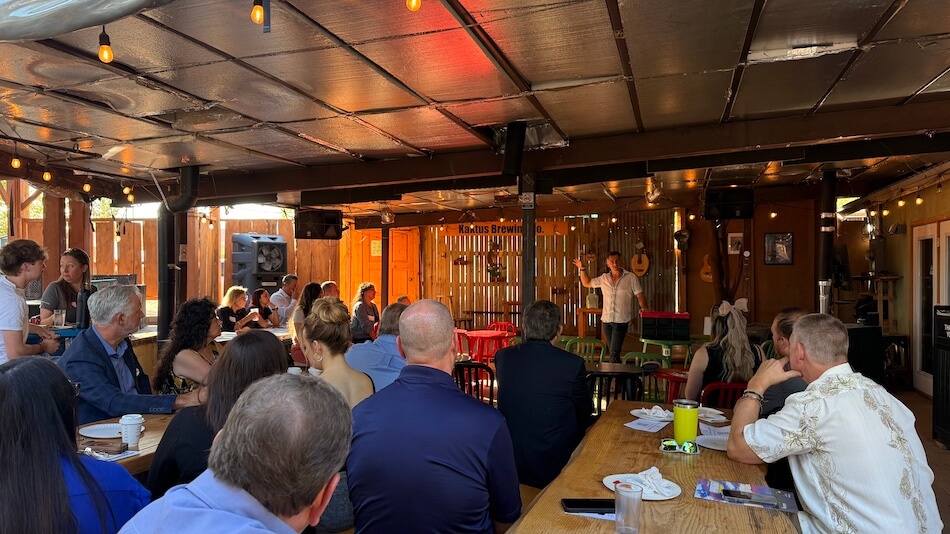
High-density food production and circular manufacturing are restructuring industrial supply chains across Sandoval County. During the July 30, 2026 Partner Breakfast in Bernalillo, Kactus Brewing Company. presented a scalable operational model for regional business expansion. Our partners sampled and approved the enterprise’s newly launched (and may we add, absolutely delicious) breakfast pizza menu, demonstrating how localized culinary innovation drives daily commercial foot traffic.
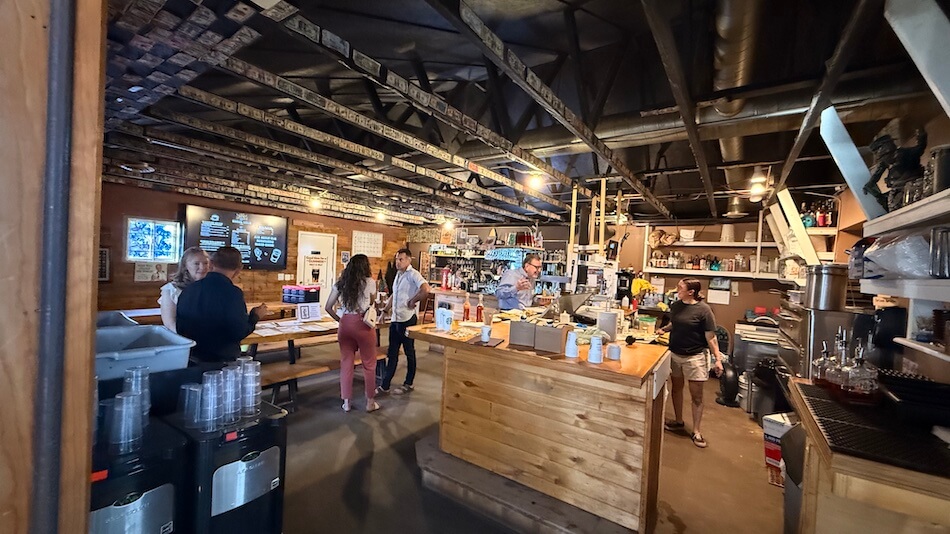
Founder Dana Koller launched Kactus Brewing Company thirteen years ago alongside his father. They started with minimal capital, selling craft beer and popcorn. Today, the business serves as a key commercial anchor in Bernalillo while facing physical space constraints.
Sandoval County continues to attract substantial private investment. Major regional developments like the $220M Project Ranger facility set the pace. Regional technical employment in math and computer roles expanded by +10.1% recently. This growth accelerates the need for flexible commercial site selection frameworks.
The Economics of Arid Container Agriculture
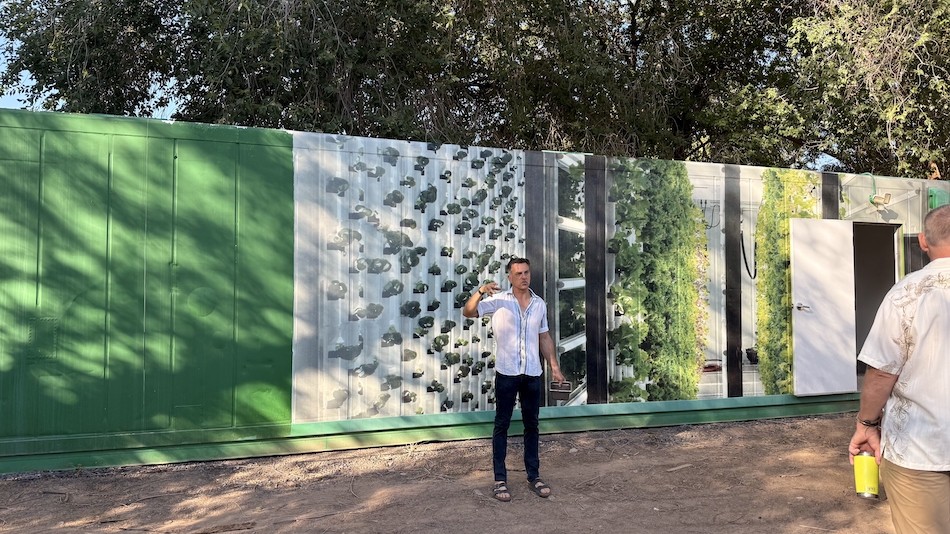
Physical space constraints often restrict traditional urban and suburban commercial agriculture. Kactus Brewing Company addresses this challenge through vertical hydroponic container systems. The reality on the ground is that persistent water scarcity and soil degradation limit traditional agricultural growth across New Mexico. Controlled-environment agriculture bypasses these regional environmental limitations while using 90% less water than outdoor farming.
A single specialized shipping container houses 2,000 active hydroponic plants within a 320-square-foot footprint. This footprint yields the agricultural output of five acres of traditional farmland. The cultivation process operates without synthetic additives, chemical preservatives, or artificial pesticides. This matters because local consumers increasingly demand high-density nutritional products that minimize environmental externalities.
To increase crop nutritional density, the business collaborates with scientific researchers at Sandia National Laboratories and New Mexico State University. This research partnership applies advanced soil science and plant chemistry directly to regional food output. The enterprise also provides public culinary instruction. These sessions teach local residents how to preserve maximum bio-available nutrient levels during cooking.
Hydroponic Operational Metrics
- Footprint Required: 320 Square Feet
- Equivalent Traditional Farmland: 5.0 Acres
- Active Crop Capacity: 2,000 Hydroponic Units
- Water Consumption Reduction: 90% Compared to Standard Farming
- Applied Research Partners: Sandia National Laboratories, New Mexico State University
Closed-Loop Manufacturing and Bio-Economy Supply Chains
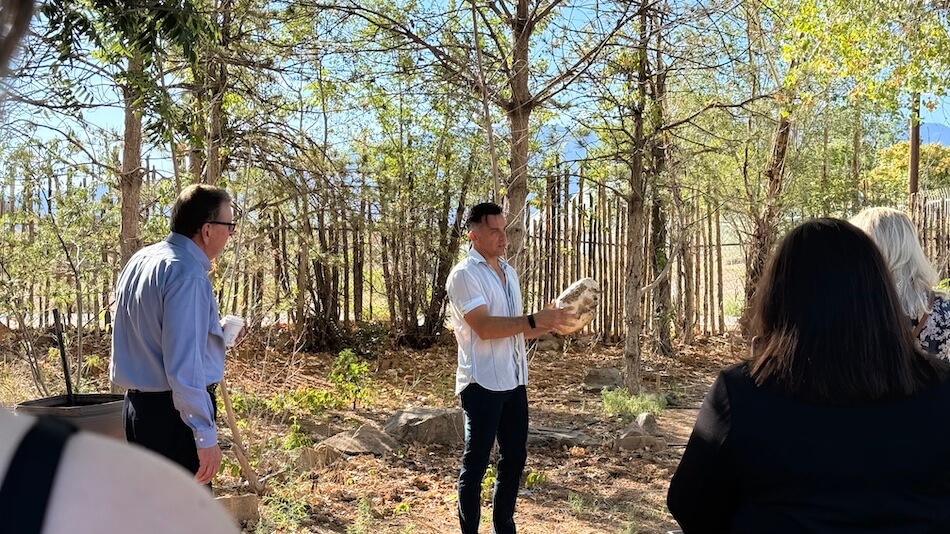
Standard food and beverage operations generate substantial municipal landfill waste and ongoing disposal liabilities. Kactus Brewing Co. engineered a closed-loop processing model that converts industrial waste byproducts into high-value commercial commodities. Here is the friction point: Standard waste handling expenses increase operational overhead for growing food and beverage manufacturers. By redirecting spent brewing grains, the company eliminates waste disposal costs while building new commercial revenue channels.
The waste conversion process follows a precise four-stage operational cycle:
- Spent grain from brewing operations supplies nutritious feed to local livestock and poultry farms.
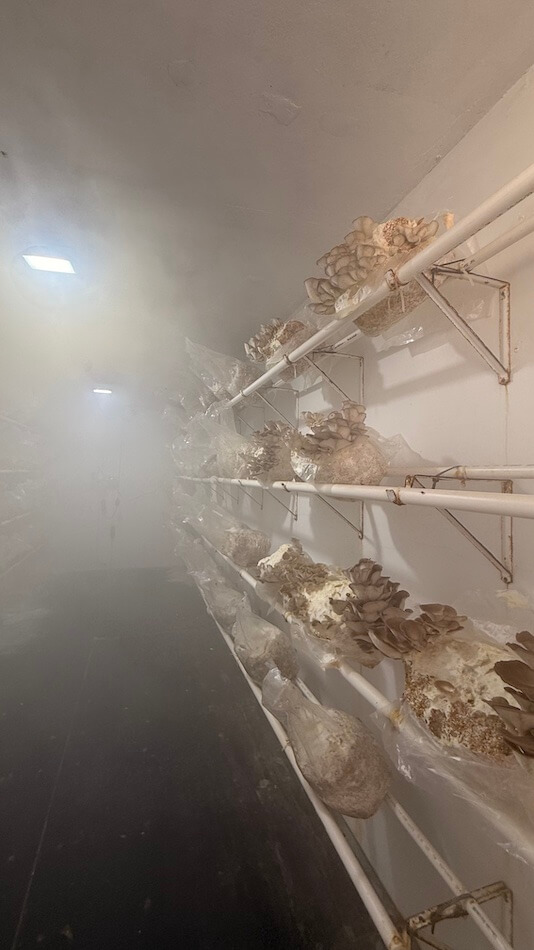
- Secondary organic substrates combine with grain residue to cultivate specialty mushrooms, generating 600 pounds of culinary and medicinal varieties monthly.
- Spent mushroom substrate processes into nitrogen-absorbing poultry bedding and high-potency organic compost starter.
- Fungal mycelium neutralizes ammonia within poultry waste, eliminating coop odors entirely and producing clean organic fertilizer.
The facility cultivates premium medicinal species, including Lion’s Mane, for regional health food distributors, local restaurants, and specialized pharmaceutical supply chains. The bottom line is this: circular manufacturing turns disposal liabilities into revenue-generating assets.
Circular Manufacturing Flow
Brewing Byproducts -> Livestock Feed -> Mushroom Substrate -> Nitrogen Bedding -> Soil Compost
There is a catch, though: Expanding this multi-tier ecosystem requires reliable commercial distribution channels and regional retail access. Sandoval Economic Alliance assists expanding enterprises as they secure wholesale partnerships for high-margin biological products. The company is installing onsite glass crushing equipment for its next expansion phase. This specialized machinery will grind spent glass containers into raw silica materials for regional soap manufacturing and local construction aggregates.
Community Integration and Educational Infrastructure
Industrial sustainability programs yield maximum economic return when local educational institutions and residents participate directly. Kactus Brewing Co. is establishing direct educational partnerships with school districts across Sandoval County. Students will visit the Bernalillo facility to study applied hydroponics, biological waste processing, and regional supply chain engineering.
The business is also launching a community intake program where local residents bring recyclable waste directly to the facility for commercial processing. This community-focused model reduces municipal landfill pressure while building a localized, resilient supply chain network across Rio Rancho and Bernalillo.
Strategic Implications for Site Selection and Regional Policy
This matters because rapid business expansion across Sandoval County requires modern, flexible light-industrial zoning rules. Growing commercial enterprises cannot scale operations within traditional retail footprints. Sandoval Economic Alliance provides strategic site selection support and capital alignment resources to high-growth regional businesses. Case studies like Kactus Brewing Co. prove that high-density agriculture and circular bio-manufacturing strengthen regional economic resilience.
The bottom line is this: Regional economic stability depends on supporting homegrown businesses as they transition from small craft operations into scalable industrial innovators.
Actionable Growth Priorities for Sandoval County
- Expand light-industrial zoning provisions for high-density agtech facilities.
- Facilitate commercial site selection for mid-scale circular manufacturing operations.
- Connect local bio-manufacturers with regional wholesale logistics networks.
- Enhance utility infrastructure to support dual commercial-agricultural facilities.
By pairing advanced agricultural research with closed-loop manufacturing, enterprises in Bernalillo and Rio Rancho demonstrate that industrial growth can remain both profitable and ecologically sustainable.