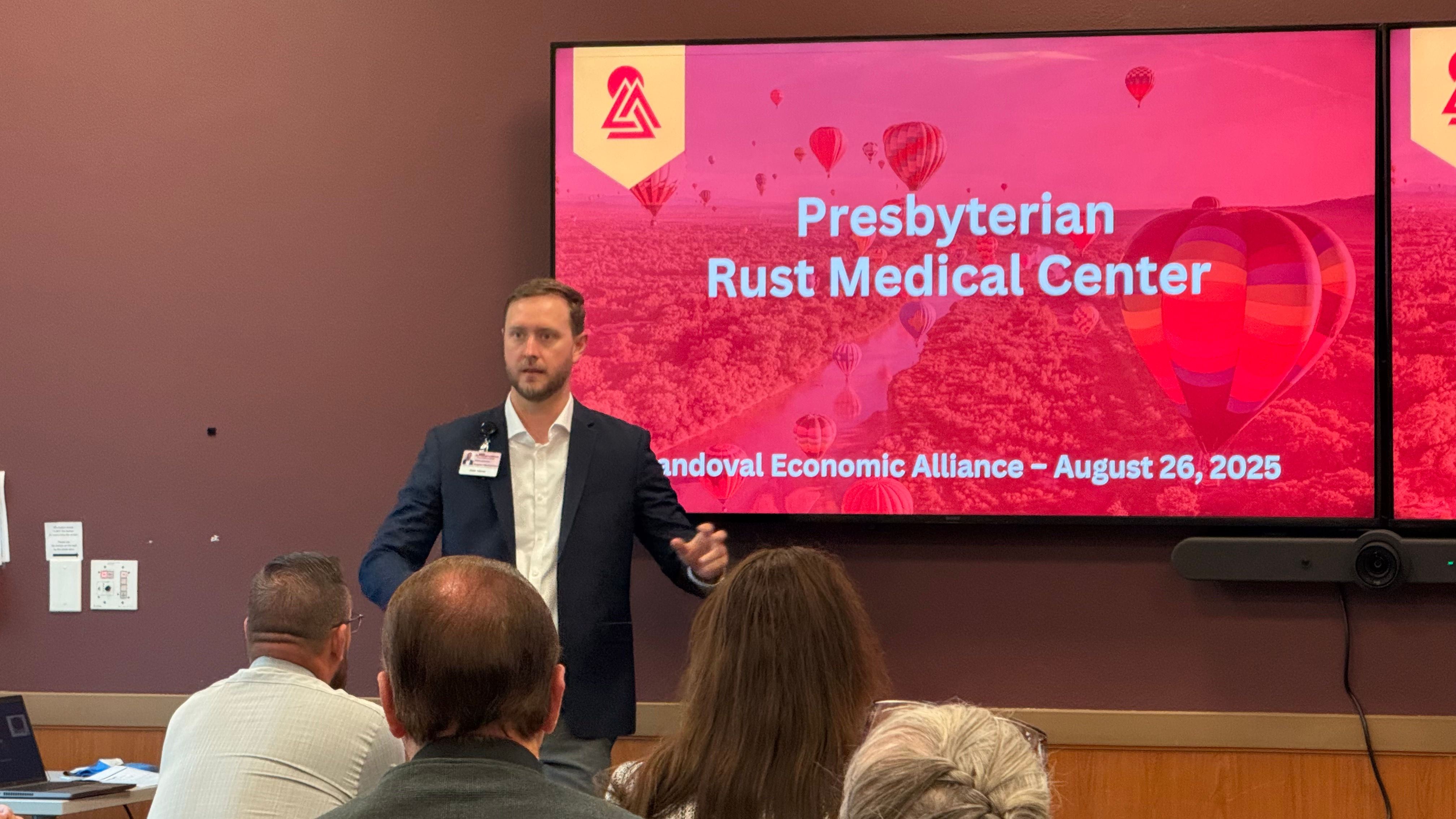
Health Care in New Mexico — Notes from John Adams of Presbyterian Rust Medical Center
New Mexico’s healthcare system is at a crossroads. At a recent Sandoval Economic Alliance meeting, John Adams, CEO of Presbyterian Rust Medical Center in Rio Rancho, painted a picture many in the state already sense: demand for care is surging, the workforce is shrinking, and systemic cost pressures — including an outsized malpractice climate — are squeezing providers and patients alike. Adams’ remarks about digital health, staffing pipelines and facility expansion offer a useful window into how one growing hospital is responding while also describing problems that are statewide in scope.
Growing demand and facility responses
Rust Medical Center is preparing for a sharp increase in patient volume. Adams said the hospital plans to add beds and expand oncology space to meet demand driven not just by local population growth but by patients coming from across the state for care. To maximize capacity quickly, the hospital is also building more semi-private rooms — a compromise, Adams acknowledged, but preferable to overflowing emergency departments where patients can be left waiting for hours. Those concrete capacity moves reflect a broader reality: New Mexico needs more physical space to treat patients, and providers are forced to choose between imperfect options as demand outstrips supply.
The Importance of Healthcare Workforce Development
Adams emphasized that the shortage of health-care practitioners is central to New Mexico’s crisis. He argued that the University of New Mexico remains the primary source of the state’s medical personnel, but New Mexico has the dubious distinction of being the only U.S. state that is losing physicians year-over-year — a trend that undermines access, especially in rural and smaller communities. That loss of physicians is compounded by competition from neighboring states (Colorado, for example) and by the reality that many practitioners leave because of high practice costs and liability exposure.
Malpractice, insurance costs, and a “malpractice-rich” environment
One of the most alarming themes Adams raised was malpractice: he described New Mexico as a “malpractice-rich environment,” pointing to a disproportionate percentage of malpractice cases compared with national rates and to skyrocketing malpractice insurance premiums. Adams noted that some insurers have exited the state, and for those who remain premiums have risen dramatically — figures Adams characterized in the presentation as a multi-hundred-percent spike in some contexts. The downstream effect is predictable and damaging: higher operating costs for physicians, closed practices, and fewer new clinicians willing to set up here. Local reporting on the presentation picked up on this point as a key driver of the physician exodus.
Payer mix and budgetary constraints
New Mexico’s payer mix makes addressing the shortage more difficult. Adams pointed out that roughly 40% of New Mexico’s population is covered by Medicare and Medicaid — about double the national average — which can strain hospital margins because public programs typically reimburse at lower rates than commercial insurers. That compression of revenue, combined with expensive liability insurance and the departure of commercial carriers, limits hospitals’ ability to invest in recruitment, higher salaries, and training programs that could stabilize the workforce.
Digital health, telehealth, and AI as partial solutions
Adams highlighted digital health as a way to reduce costs and extend reach: telemedicine, remote monitoring, and workflow automation can shift some care upstream and avoid expensive in-person visits. But he also warned of practical limitations: federal funding for telehealth programs is constrained, and reimbursement policies can be uneven — barriers that blunt telehealth’s statewide impact. On the technology front, Rust is experimenting with AI in targeted ways: AI-assisted medical transcription to speed consultations, and alerting systems that flag imaging results for clinicians. These innovations can shorten visit times and help clear backlogs, but as Adams candidly noted, health care has been slow historically to adopt new tech — and regulatory, privacy, and workflow integration issues remain.
Building the pipeline: from high school to hospital
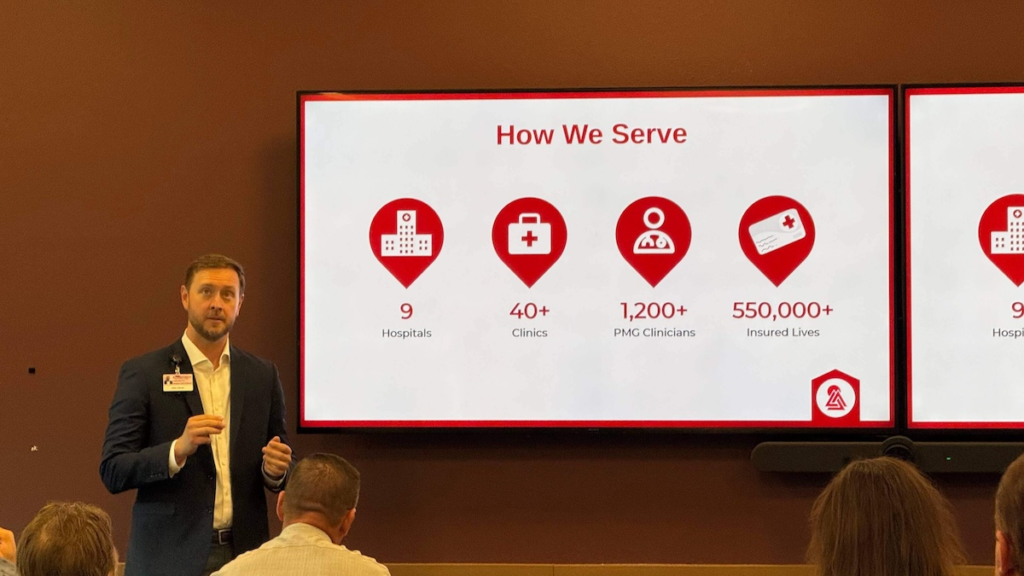
Longer-term fixes require growing New Mexico’s own workforce. Adams described efforts to “upstream” health-care careers — outreach to high-school students, partnerships with local education systems, and internal initiatives to train and retain staff. Those efforts recognize that recruitment alone won’t solve the problem if the state continues to lose physicians faster than it can produce them. Creating a stable, local pipeline is essential for rural access and for reducing reliance on out-of-state recruits.
What needs to change: affordability, liability reform, and sustained investment
Adams’ presentation pointed to three policy areas that would have outsized impact: 1) reducing the cost of practicing medicine in New Mexico (malpractice reform and stabilizing insurance markets), 2) expanding federal and state support for telehealth so remote care becomes a reliable, funded option rather than a pilot project, and 3) sustained investment in local workforce development — from scholarships to residency slots and apprenticeship pathways — to keep home-grown clinicians in state. Without coordinated action on these fronts, hospitals will continue to expand beds only to find there aren’t enough providers to staff them.
A cautious optimism
Despite these headwinds, Adams’ remarks also conveyed practical optimism. Rust Medical Center is growing, expanding oncology capacity, and deploying technology where it can yield quick wins. Those are the kinds of pragmatic responses that will be needed across New Mexico: build capacity, adopt efficient technology, and create local career paths — while policymakers and insurers address the systemic barriers (liability costs and payer constraints) that drive clinicians away.
New Mexico’s health-care challenges are large and interconnected: workforce loss, a heavy Medicare/Medicaid mix, a costly malpractice environment, and funding limits for telehealth collectively make access and affordability difficult. The solutions Adams outlined — facility expansion, digital health adoption, AI for efficiencies, and aggressive pipeline development — are sensible and necessary, but they will only go so far without policy changes that lower the cost of practice and create incentives for clinicians to build their careers here. John Adams’ presentation offers both a snapshot of the crunch and a pragmatic action list: expand capacity, use technology wisely, and grow our own workforce — all while pushing for structural reforms that make New Mexico a place where doctors want to practice.
Interested in more talks from community leaders that can impact you? Join us as a partner of SEA.